 Wildlife
Best Time to Visit Serengeti for the Great Migration: Month-by-Month Guide
The Year-Round Clockwork of the Great Migration
A common misconception among first-time safari travelers is that the Great Migration is a single event occurring once a year. In reality, it is a continuous, year-round cyclical journey of over 1.5 million blue wildebeest, 400,000 zebras, and 200,000 gazelles across the Serengeti-Mara ecosystem.
1. January to March: Southern Calving Season (Ndutu Plains)
During these three months, the herds settle in the short-grass plains of Southern Serengeti and Ndutu. In a synchronized biological marvel, over 8,000 calves are born every single day within a three-week window.
- Why Go: Highest density of big cat hunts anywhere in Africa. Cheetahs and lion prides stalk open plains.
- Best Camps: Mobile tented camps in Ndutu and Kusini.
2. April to June: The Grumeti River Crossings
As the dry season approaches, the herds begin moving northwest into the Western Corridor. In June, they encounter their first major water barrier: the Grumeti River, inhabited by 18-foot Nile crocodiles.
3. July to October: Legendary Mara River Crossings
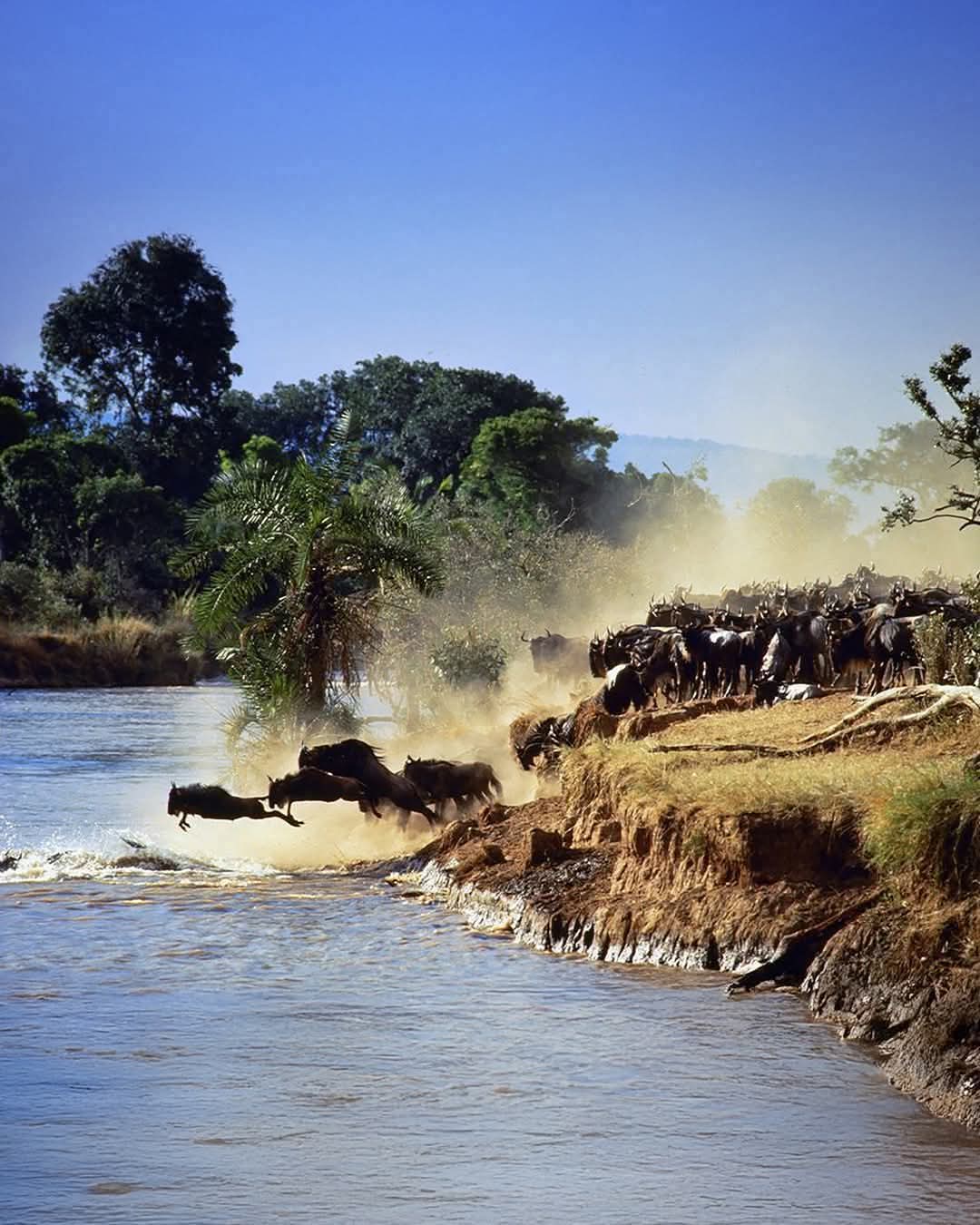
The iconic National Geographic scenes unfold here in Northern Serengeti (Kogatende). Herds hesitate on steep cliffs before plunging into rushing waters amid snapping crocodiles and watchful lion prides on the opposite bank.
- Pro-Tip: Book your northern Serengeti safari at least 6 to 9 months in advance as luxury camps near Kogatende fill up rapidly.
4. November to December: The Southbound Journey
With the onset of the short rains, fresh green shoots appear in the south. The herds trek back down through Seronera (Central Serengeti), offering splendid game viewing with dramatic afternoon cloud formations and lower tourist numbers.
Ready to Experience Tanzania in Real Life?
Our native Tanzanian safari guides customize every detail from private 4x4 vehicles to luxury tented camps.